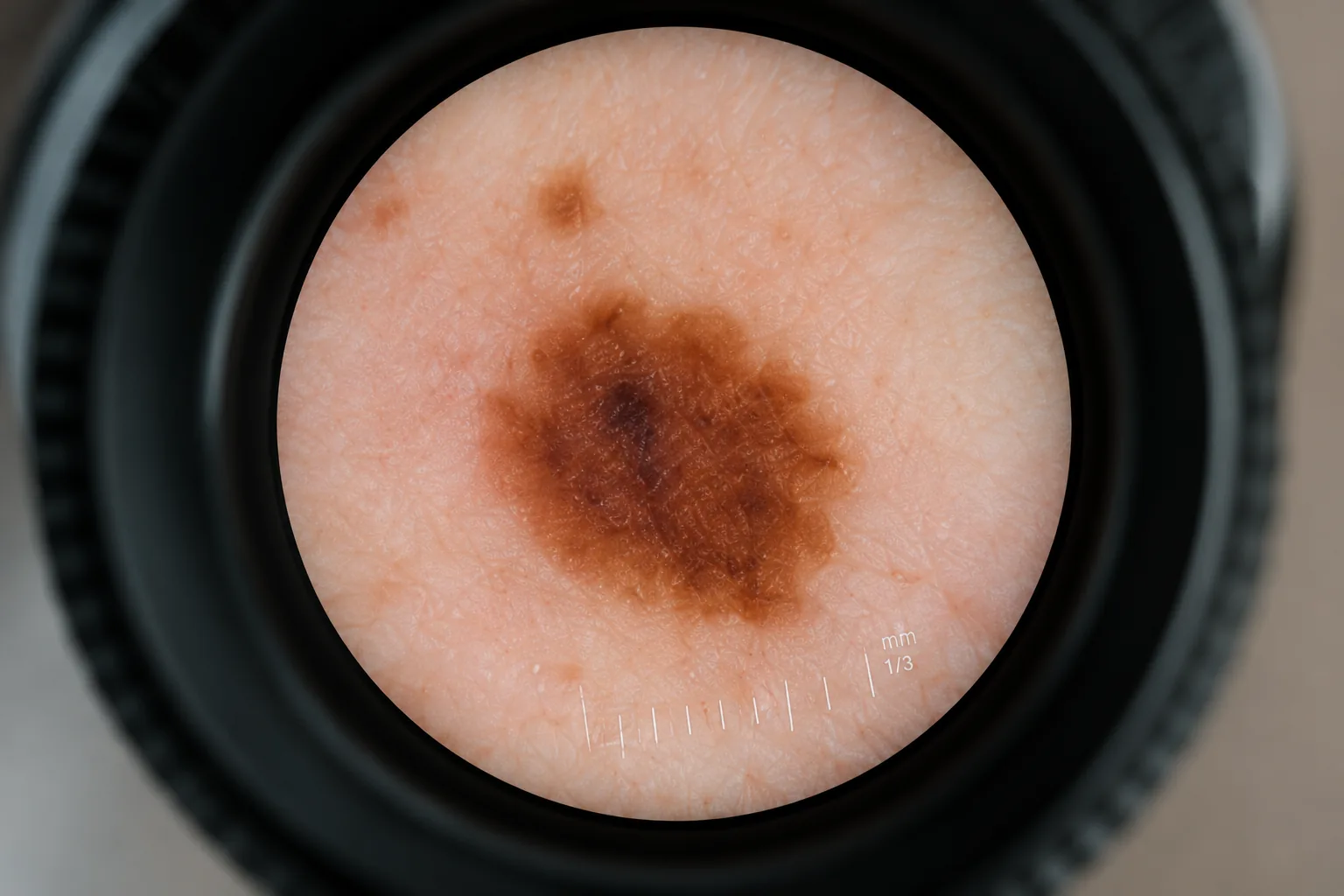
Mole Checks
If you have noticed a new or changing mole, have a particular mole you are worried about, or would simply like your moles checked, Dr Emma Horton provides consultant led mole assessment and dermoscopy.
Dr Emma regularly assesses moles and suspected skin cancers as part of her NHS skin cancer clinics and can advise whether a mole is reassuring, needs monitoring or requires further investigation.
Expert assessment of your moles
You do not need to wait until a mole has changed or developed symptoms before having it checked. Dr Emma sees patients with a single mole of concern as well as those with multiple moles who would like a more general skin check.
You may wish to arrange a mole check if:
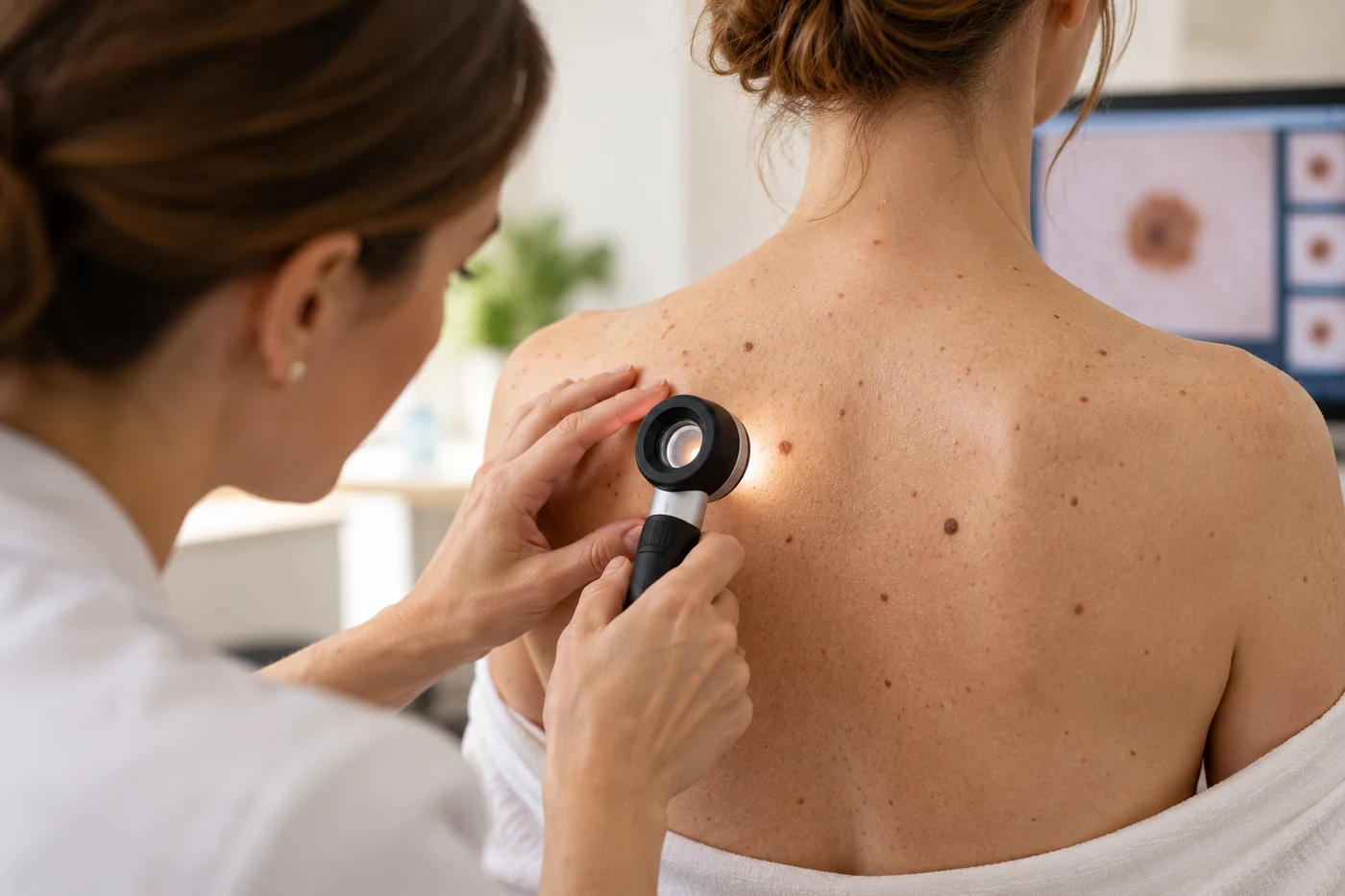
Where appropriate, Dr Emma will examine your moles using dermoscopy, which allows structures and pigmentation within a mole to be assessed in greater detail.
For more information about diagnosis and treatment, explore Skin Cancer.
What to expect from your consultation
Your history
I’ll ask about the mole or moles you are concerned about, when you first noticed them and whether you have seen any changes. I’ll also ask about relevant factors such as previous skin cancers and family history.
Mole assessment
I’ll examine the mole or moles carefully and use dermoscopy where appropriate to assess features that cannot be seen with the naked eye.
Diagnosis and advice
In many cases I will be able to reassure you that a mole appears benign. If a mole needs monitoring or further investigation, I’ll explain why and talk you through the next steps.
Further investigation
If a mole needs to be biopsied or removed, I’ll explain what is involved. Any procedure is arranged separately from your consultation and the cost will be discussed with you beforehand.
Where more complex surgery or specialist treatment is required, Dr Emma can arrange onward referral to the appropriate specialist.
Mole and lesion assessment
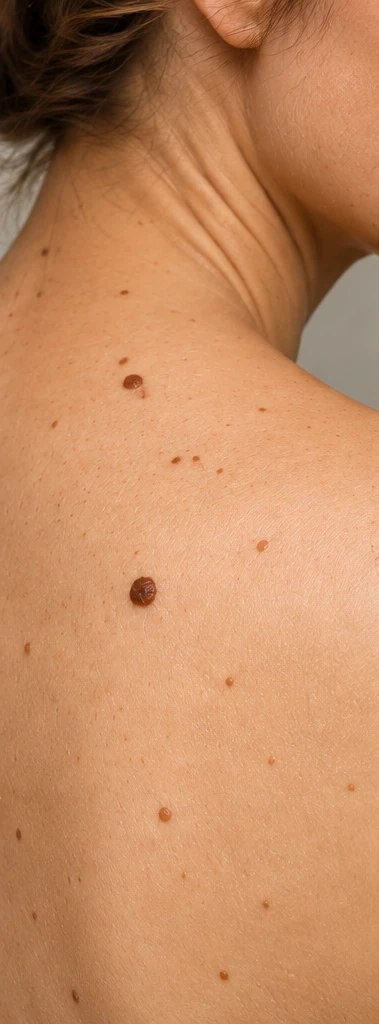
Full skin examination
A careful examination of your skin, including assessment of individual moles or lesions that are concerning you.
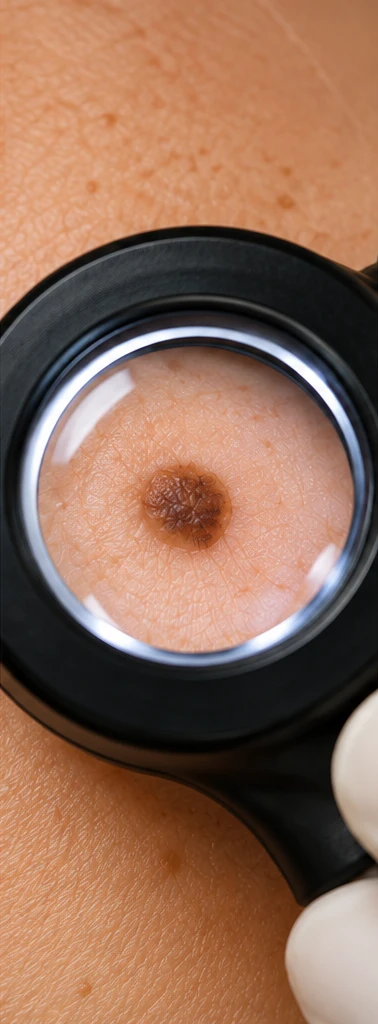
Dermoscopy
Specialist magnified examination of moles and pigmented lesions, allowing features beneath the surface of the skin to be assessed in greater detail.
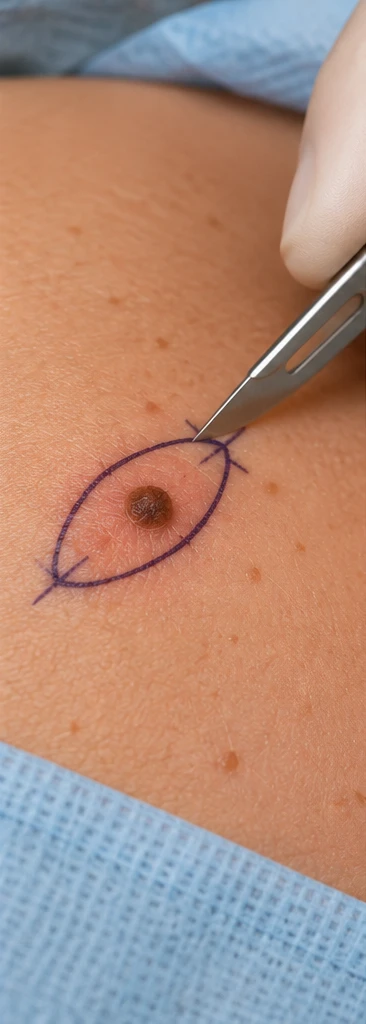
Minor surgery & lesion removal
Where appropriate, Dr Emma can perform biopsies and excisions of suitable skin lesions under local anaesthetic. Benign lesions such as seborrhoeic keratoses and skin tags can also be removed where suitable.
Results & ongoing advice
You will receive a clear explanation of the findings and what happens next. This may simply be reassurance, or advice about monitoring, sun protection, further investigation or treatment.