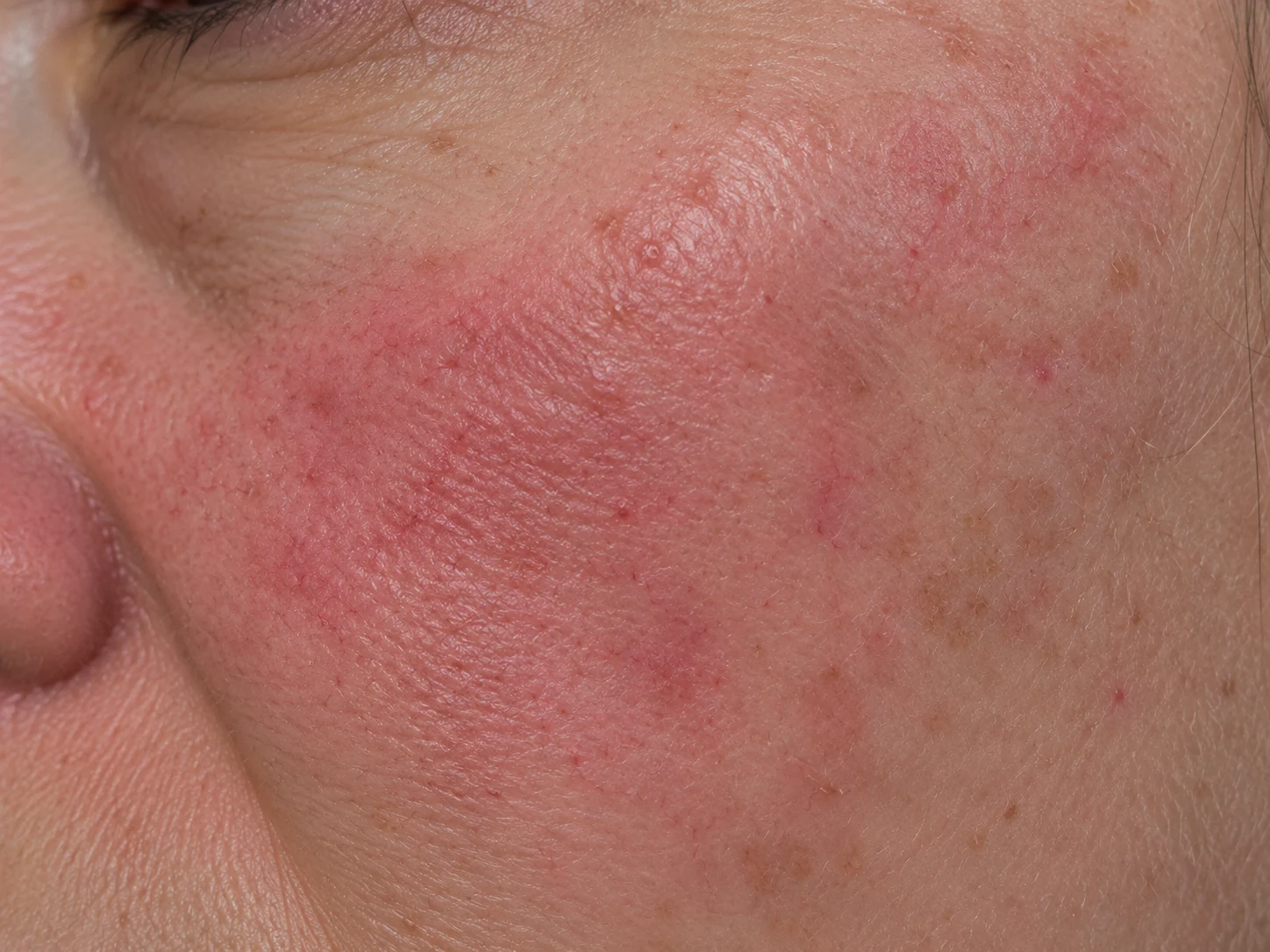
Rosacea
Rosacea is a common, long term condition that causes facial redness, flushing and visible blood vessels. Dr Emma offers a personalised approach to treating rosacea, with options including prescription topical treatments, individually formulated serums where appropriate, and oral medication when needed.
When should you seek advice
for Rosacea?
Rosacea often develops gradually and can be mistaken for sensitive skin or acne. A specialist assessment identifies the type of rosacea you have and the triggers behind it, so treatment can be targeted and effective.
What to expect from your consultation
Your History
I'll ask about your symptoms, how long you've been affected, what treatments you've tried, and how your condition is impacting your day to day life.
Clinical assessment
I'll carry out a thorough examination of your skin to build a clear picture of what's going on.
Diagnosis
I'll give you a clear diagnosis and, if needed, recommend any further investigations.
Your treatment plan
You'll leave with a personalised treatment plan and a full understanding of what we're doing and why.
Treatment options for Rosacea
Every case is different, but here's an overview of what treatment might look like:

Topical treatments
Creams and gels to reduce redness, inflammation and visible spots.

Oral medication
Short, monitored courses of oral treatment to calm more persistent rosacea.

Trigger management
Identifying and managing the everyday triggers that bring on flare ups.
Skin barrier support
A gentle, dermatologist led routine to protect and strengthen sensitive skin.