Alopecia Areata: Causes, Hair Regrowth and the Latest Treatments
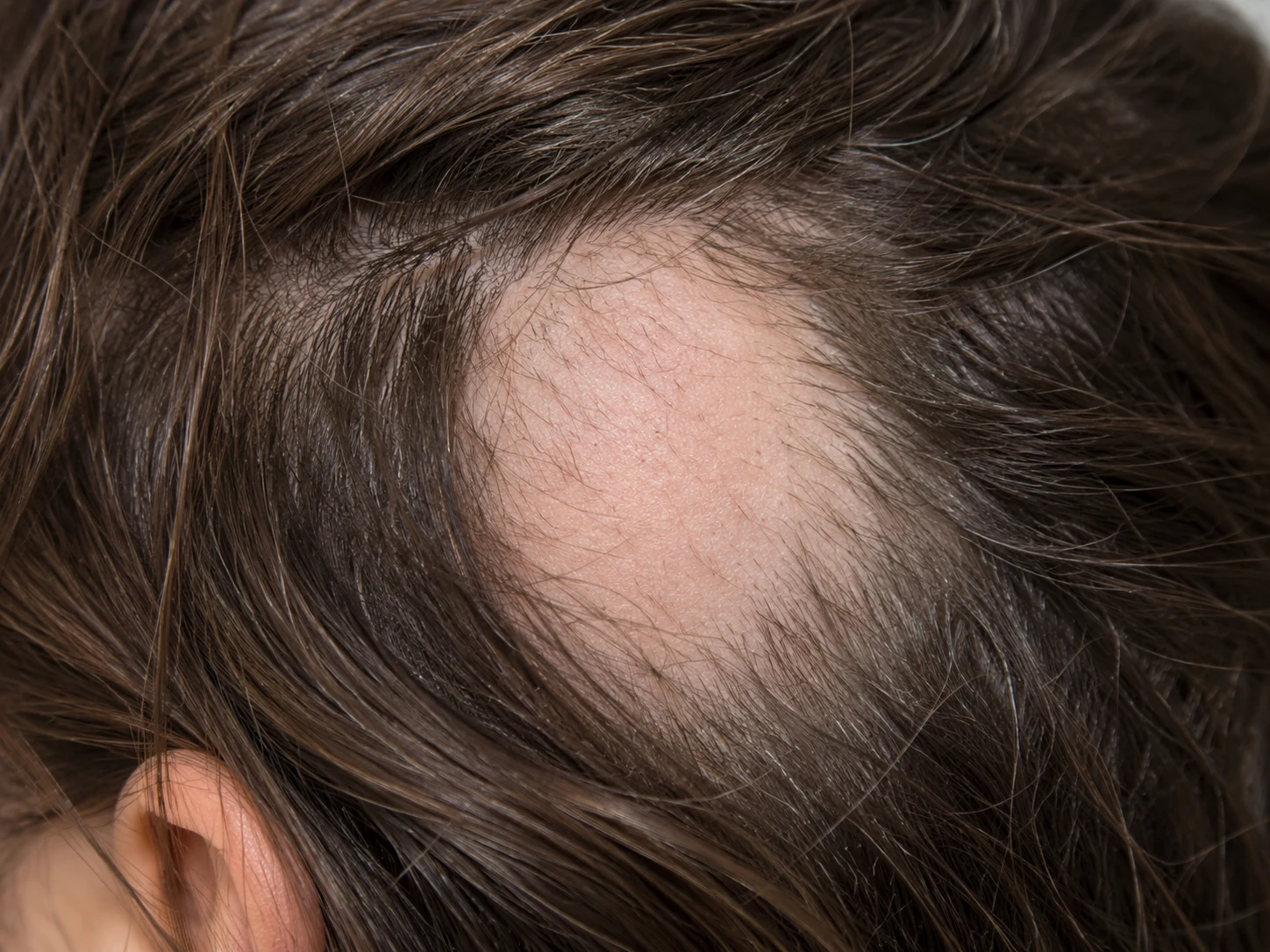
Alopecia areata is a common condition that causes hair loss, usually in one or more round or oval patches on the scalp. It can affect adults and children and may also involve the eyebrows, eyelashes, beard or other areas of body hair.
Discovering a bald patch can understandably be worrying, particularly when the hair loss appears suddenly. However, alopecia areata varies considerably between individuals. Many people develop only one or two small patches, and hair often regrows, sometimes without any treatment.
Others experience repeated episodes or more extensive hair loss.
Although the course of alopecia areata can be unpredictable, there are several effective treatments available, including steroid creams, steroid injections and newer tablet treatments.
What causes alopecia areata?
Alopecia areata is an autoimmune condition. This means that the body's immune system mistakenly attacks its own hair follicles, interrupting normal hair growth.
The good news is that the hair follicles are usually not permanently damaged. This means that hair can regrow once the inflammation settles, even if the area has been bald for some time.
The exact reason why alopecia areata develops is not fully understood. Genetics appear to play a role, and the condition sometimes runs in families.
Can stress trigger alopecia areata?
Stress is often mentioned as a possible trigger, and some people notice hair loss following a particularly stressful period or illness.
However, the relationship is complex, and many people develop alopecia areata without any obvious trigger.
There is no convincing evidence that everyday stress alone causes the condition, and patients should not feel that they have brought it on themselves.
What are the first signs of alopecia areata?
The most common sign is a smooth, round or oval patch of hair loss, usually on the scalp.
Sometimes the patch is first noticed by a hairdresser or family member.
The skin within the patch generally looks completely normal, without redness, scaling or scarring.
Other features can include:
One or more bald patches: These may appear anywhere on the scalp or affect the eyebrows, eyelashes or beard.
Short broken hairs: Sometimes visible around the edges of a patch, suggesting the condition is active.
Fine white hairs: New hair may initially grow back pale or colourless before gradually returning to its usual thickness and colour.
Nail changes: Some people develop small pits or ridges in their fingernails.
Occasionally, people notice mild tingling, itching or sensitivity in the affected area.
Are there different types of alopecia areata?
Alopecia areata can affect people in different ways.
Patchy alopecia areata is the most common form, causing one or several distinct patches of hair loss. Many people experience only limited hair loss and achieve good regrowth.
Ophiasis alopecia causes a band of hair loss around the back and sides of the scalp. This pattern can sometimes be more difficult to treat.
Diffuse alopecia areata causes more widespread thinning rather than obvious bald patches and can resemble other forms of hair shedding.
Alopecia totalis describes complete or almost complete loss of scalp hair.
Alopecia universalis describes extensive loss of scalp and body hair, including eyebrows and eyelashes.
Importantly, having a small patch of alopecia areata does not mean that you will go on to develop complete hair loss. The more extensive forms are much less common.
Is alopecia areata linked to other autoimmune conditions?
People with alopecia areata have a slightly increased likelihood of developing certain other autoimmune conditions.
These include autoimmune thyroid disease, vitiligo and type 1 diabetes.
There is also an association with eczema, asthma and hay fever.
However, most people with alopecia areata do not have a significant underlying autoimmune disease.
Blood tests for associated conditions may be considered if there are relevant symptoms, a family history or other clinical concerns, but extensive testing is not usually necessary for everyone.
How is alopecia areata diagnosed?
A dermatologist can usually diagnose alopecia areata by examining the scalp and the pattern of hair loss.
A dermatoscope, a small magnifying instrument, may be used to examine the hair follicles more closely. This can reveal characteristic changes, including short broken hairs and signs of new regrowth.
A scalp biopsy is rarely required unless the diagnosis is uncertain.
Do I need blood tests?
Blood tests are not usually needed to confirm alopecia areata.
However, depending on your symptoms and medical history, your dermatologist may recommend checking thyroid function, iron stores (ferritin) or vitamin D levels.
Low iron or vitamin D levels can sometimes coexist with hair loss, and correcting a genuine deficiency is important.
However, alopecia areata is primarily an autoimmune condition. Taking iron or vitamin D supplements when your levels are already normal is unlikely to make a significant difference to hair regrowth.
Will my hair grow back?
This is understandably one of the most common questions.
Many people with limited patchy alopecia areata experience spontaneous regrowth, particularly during the first year.
Some people have just one episode and never experience further hair loss. Others may develop new patches months or years later.
Hair regrowth can be slow, and it may take several months before a noticeable improvement occurs.
New hairs often initially appear fine and white before gradually becoming thicker and regaining their usual colour.
The outlook can be less predictable when hair loss is extensive, has been present for a long time or affects the margins of the scalp.
Even when hair regrows successfully, recurrence is possible.
What treatments are available for alopecia areata?
Treatment depends on how much hair has been lost, how quickly the condition is progressing and which areas are affected.
For a small, stable patch, monitoring without immediate treatment can sometimes be reasonable because spontaneous regrowth is common.
However, many patients understandably prefer to try treatment to encourage regrowth.
Steroid creams and scalp lotions
Potent topical corticosteroids are commonly used to treat alopecia areata.
They work by reducing the inflammation around affected hair follicles.
Depending on the area being treated, they may be prescribed as creams, lotions, foams or scalp solutions.
These treatments can be particularly useful for children, patients with several patches or those who would prefer to avoid injections.
Treatment is generally prescribed for a defined period and reviewed to assess improvement.
Steroid injections for alopecia areata
Steroid injections are one of the most effective established treatments for adults with small, localised patches of alopecia areata.
The treatment involves injecting tiny amounts of a corticosteroid, usually triamcinolone, directly into the affected areas of the scalp.
This reduces inflammation around the hair follicles and can encourage regrowth.
Injections are usually repeated approximately every four to six weeks, depending on response.
Hair regrowth may become noticeable after several sessions, although results vary between individuals.
The injections can cause temporary discomfort, and occasionally small indentations or thinning of the skin occur at the injection sites.
For suitable patients with limited patchy hair loss, intralesional steroid injections can be a particularly useful treatment option.
Tacrolimus (Protopic)
Tacrolimus, commonly known as Protopic, is a non steroid anti inflammatory ointment sometimes considered for selected patients.
It is widely used to treat eczema and may be considered where prolonged use of topical steroids is undesirable.
However, evidence for its effectiveness in alopecia areata is limited, and it is generally less effective than established treatments such as steroid injections.
It is not routinely recommended as a first choice treatment for scalp alopecia areata.
Minoxidil
Minoxidil is commonly used for other forms of hair loss but may sometimes be recommended alongside treatments for alopecia areata.
It helps support hair growth rather than treating the underlying autoimmune process.
Topical minoxidil may be useful as an additional treatment, particularly when hair is beginning to regrow.
Oral minoxidil is occasionally considered by specialists, although it is prescribed off label for hair loss and is not suitable for everyone.
Oral steroid tablets for alopecia areata
For patients experiencing rapidly progressing or more widespread hair loss, a short course of oral corticosteroids, such as prednisolone, may sometimes be considered.
These work by reducing the immune activity responsible for hair loss.
They can be helpful in selected circumstances, particularly when the condition is progressing quickly.
However, oral steroids are not generally suitable as a long term treatment because of their potential side effects.
Hair loss can also recur after treatment is stopped, so the benefits and limitations need to be discussed carefully.
Newer treatments: JAK inhibitor tablets
One of the most important recent developments in alopecia areata treatment has been the introduction of a newer group of medications called JAK inhibitors.
These tablets work by blocking some of the immune signals responsible for attacking the hair follicles.
They have shown encouraging results in clinical trials, including in patients with extensive hair loss.
Ritlecitinib (Litfulo)
Ritlecitinib is a tablet treatment licensed for severe alopecia areata in adults and adolescents aged 12 years and over.
It is available through the NHS for eligible patients under NICE guidance.
Clinical trials have shown that some patients experience substantial hair regrowth, although improvement can take several months and not everyone responds.
Deuruxolitinib (Leqselvi)
Deuruxolitinib is another newer tablet treatment for adults with severe alopecia areata.
It was authorised in the UK in 2026 following clinical trials demonstrating meaningful hair regrowth in some patients.
Availability through the NHS depends on the relevant NICE recommendations and local prescribing arrangements.
Are JAK inhibitor tablets suitable for everyone?
These treatments are generally reserved for more extensive alopecia areata rather than one or two small patches.
They require specialist assessment and monitoring because they affect the immune system and can have significant side effects, including infections and changes in blood tests. Other less common but potentially serious risks also need to be considered.
They represent an important advance for patients with more severe disease, although treatment needs to be carefully individualised.
Can vitamins, supplements or diet help?
There is considerable interest in supplements marketed for hair growth.
Although nutritional deficiencies can contribute to some forms of hair loss, alopecia areata is primarily caused by an autoimmune process.
Correcting low iron stores or vitamin D deficiency may be appropriate, but taking additional supplements when levels are normal has not been shown to reliably reverse alopecia areata.
Similarly, there is no particular diet that has been proven to cure the condition.
A balanced diet is sensible for general health, but patients should be cautious about expensive supplements promising dramatic hair regrowth.
Living with alopecia areata
Hair loss can have a significant emotional impact, even when only a small patch is affected.
Some people prefer to conceal patches by changing their hairstyle, while others use hair fibres, scalp camouflage products or hairpieces.
For more extensive hair loss, wigs and eyebrow products may be helpful.
Organisations such as Alopecia UK provide useful information and support.
There is no right or wrong way to manage hair loss, and individual preferences are an important part of treatment decisions.
When should you see a dermatologist for alopecia areata?
A dermatology consultation may be helpful if you notice a new patch of hair loss, develop several patches or are unsure what is causing the problem.
A dermatologist can examine the scalp, confirm the diagnosis and discuss whether treatment or monitoring is most appropriate.
For patients with limited patchy alopecia areata, topical steroids or steroid injections may help encourage regrowth. More extensive hair loss may require discussion of additional treatments or referral to a specialist hair loss service.
Although alopecia areata can be unpredictable, many people experience good regrowth, and treatment options have improved considerably in recent years.
For information about specialist assessment and care, explore Hair Loss.