Melasma: Understanding Pigmentation and the Treatments That Really Work
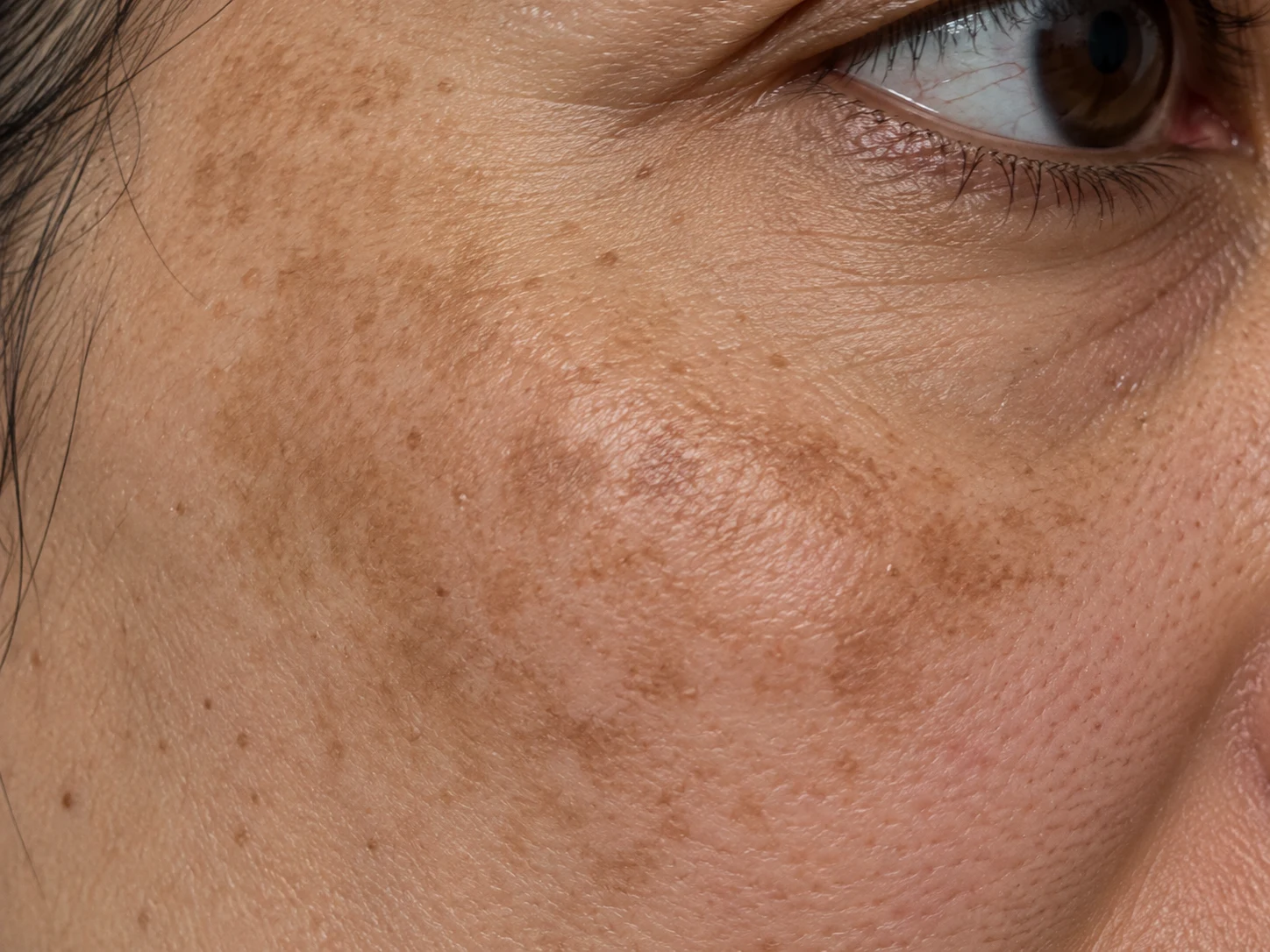
Melasma is a common pigmentation condition that causes patches of brown, grey brown or sometimes darker discolouration, most often on the face. It frequently affects the cheeks, forehead, upper lip and nose, and can be particularly frustrating because pigmentation may improve with treatment only to return during the summer or after sun exposure.
Although melasma is harmless, it can be difficult to treat and may have a significant impact on confidence.
There are several effective treatment options, ranging from prescription creams containing hydroquinone or tretinoin to newer ingredients such as Thiamidol, cysteamine and tranexamic acid.
The most successful approach usually combines treatment of existing pigmentation with measures to prevent it returning.
What causes melasma?
Melasma develops when pigment producing cells in the skin, known as melanocytes, produce excessive amounts of melanin.
The exact cause is complex, but several factors are recognised:
Sun exposure: Ultraviolet radiation stimulates pigment production and is one of the most important triggers.
Visible light: Certain wavelengths of visible light, particularly blue violet light, can contribute to pigmentation, especially in darker skin types.
Hormones: Melasma is more common during pregnancy and may be associated with hormonal contraception.
Genetics: A family history can increase susceptibility.
Heat and inflammation: These may contribute to worsening pigmentation in some individuals.
Melasma is particularly common in women, although men can also be affected. It occurs across all skin types but is more frequently seen in people with medium to darker skin tones.
Importantly, melasma is not caused by poor skincare, and it does not necessarily indicate an underlying hormonal imbalance.
What does melasma look like?
Melasma typically produces symmetrical patches of pigmentation on the face.
Common patterns include pigmentation across both cheeks, the forehead, bridge of the nose or upper lip.
The pigmentation is usually flat, without scaling or changes in skin texture.
Melasma can be predominantly epidermal, involving pigment closer to the skin surface, or have a deeper dermal component. Many patients have a combination.
Superficial pigmentation generally responds better to topical treatment, while deeper pigmentation can be more resistant.
Other conditions, including post inflammatory hyperpigmentation, sun spots and certain acquired pigmentary disorders, can resemble melasma. An accurate diagnosis is therefore important before starting treatment.
Hydroquinone: one of the most effective treatments for melasma
Hydroquinone remains one of the best established prescription treatments for melasma.
It works by inhibiting tyrosinase, an enzyme involved in melanin production, gradually reducing excess pigmentation.
Hydroquinone is commonly prescribed in concentrations such as 2% or 4%, although other strengths may be considered in selected circumstances under specialist supervision.
Improvement usually develops gradually over approximately 8 to 12 weeks, rather than immediately.
Why is hydroquinone usually used in treatment cycles?
Hydroquinone is generally used for defined treatment periods rather than continuously throughout the year.
A typical approach might involve a course of approximately three months, followed by a break or a change to alternative maintenance treatments.
The precise duration depends on the formulation, response and individual circumstances.
Prolonged or inappropriate use can increase the risk of irritation and, rarely, exogenous ochronosis, a difficult to treat blue black discolouration of the skin.
For this reason, hydroquinone is best prescribed and monitored by a clinician experienced in treating pigmentation.
During breaks from hydroquinone, other ingredients such as azelaic acid, retinoids or suitable cosmetic pigment inhibitors may be used to help maintain improvement.
Tretinoin and prescription retinoids
Tretinoin is a prescription retinoid derived from vitamin A. It encourages skin cell turnover and can help improve uneven pigmentation over time.
It is often used alongside hydroquinone because the ingredients act through different mechanisms.
Tretinoin also has established benefits for acne, skin texture and fine lines, making it particularly useful for patients who want to address pigmentation alongside other skin concerns.
However, tretinoin can cause dryness, redness and peeling, particularly when first introduced.
This is especially important in melasma because excessive irritation can itself aggravate pigmentation.
Treatment should therefore be introduced carefully, with attention to skin tolerance and moisturising.
Topical retinoids are generally avoided during pregnancy and when planning pregnancy.
Combination prescription creams for melasma
Some of the strongest evidence for treating melasma comes from combination prescription creams.
A well established example is triple combination therapy containing:
Hydroquinone to reduce pigment production
Tretinoin to improve cell turnover
A topical corticosteroid to reduce inflammation and irritation
These combinations can be particularly effective for more pronounced pigmentation but are generally used for limited periods under medical supervision.
Individually compounded prescription creams may also allow compatible ingredients to be combined at different strengths according to a patient's skin type, sensitivity and treatment response.
For example, a formulation may be designed to address pigmentation alongside acne or signs of skin ageing.
However, higher concentrations are not automatically more effective, and combining multiple active ingredients can increase irritation. The aim is to achieve improvement while maintaining a healthy skin barrier.
Azelaic acid for melasma
Azelaic acid is a useful treatment for pigmentation, particularly in patients who cannot tolerate hydroquinone or who have accompanying acne or rosacea.
It reduces abnormal pigment production and has anti inflammatory properties.
Prescription strength azelaic acid, commonly 15 to 20%, may improve melasma with regular use.
It is generally well tolerated, although temporary stinging, dryness or irritation can occur.
Azelaic acid can also be considered in some circumstances during pregnancy, following appropriate clinical advice, making it a useful alternative when retinoids and hydroquinone are unsuitable.
Tranexamic acid for melasma
Tranexamic acid has become an increasingly important treatment option for melasma.
Originally developed to reduce bleeding, it also affects pathways involved in pigment production and inflammation.
It can be used topically or, in selected patients, as an oral medication.
Topical tranexamic acid
Topical tranexamic acid is included in some pigmentation serums and compounded formulations.
It may help improve uneven pigmentation and can be combined with other ingredients.
However, the evidence for topical tranexamic acid is less established than for treatments such as hydroquinone based combination therapy.
Oral tranexamic acid
Oral tranexamic acid is sometimes considered for melasma that has not responded adequately to topical treatment.
Studies have demonstrated improvement in selected patients, although pigmentation can recur after treatment is stopped.
Oral tranexamic acid is prescribed off label for melasma in the UK.
It is not suitable for everyone because of the potential risk of blood clots. A careful medical assessment is essential, including consideration of previous thrombosis, clotting disorders, kidney disease and medications such as combined hormonal contraception.
It should only be used following an individual discussion of the potential benefits and risks.
Newer skincare ingredients for pigmentation
There has been considerable interest in newer cosmetic ingredients designed to reduce excess pigmentation.
Some have promising clinical evidence, although they should not all be considered equivalent to established prescription treatments.
Thiamidol: the ingredient in Eucerin Anti-Pigment
Thiamidol, also known as isobutylamido thiazolyl resorcinol, is a patented ingredient developed to inhibit human tyrosinase, the enzyme responsible for melanin production.
It is used in Eucerin's Anti-Pigment range.
Clinical studies suggest it can improve uneven pigmentation, including melasma, with regular use.
Thiamidol may be particularly useful as part of a maintenance skincare routine or for patients who prefer a non prescription approach.
Melasyl: the ingredient in La Roche-Posay Mela B3
Melasyl, also known as 2-mercaptonicotinoyl glycine or 2-MNG, is a newer patented ingredient developed by L'Oréal.
It works differently from traditional tyrosinase inhibitors, interacting with melanin precursors to help reduce the formation of excess pigmentation.
It is found in products including La Roche-Posay Mela B3.
Early research is encouraging, although longer term independent evidence in melasma is more limited than for established prescription treatments.
Cysteamine
Cysteamine is another topical ingredient used to treat hyperpigmentation.
It acts through several pathways involved in melanin production and has shown benefit in clinical studies of melasma.
Cysteamine creams are often used as short contact treatments, meaning they are applied for a specified period before being washed off.
Some patients find the smell or potential irritation difficult to tolerate, but it can be a useful alternative where other treatments have been unsuccessful or unsuitable.
Other useful cosmetic ingredients
Several other ingredients may help improve pigmentation, particularly as part of a maintenance routine.
Alpha arbutin: A derivative related to hydroquinone that helps inhibit pigment production. It is commonly found in cosmetic brightening serums.
Kojic acid: A tyrosinase inhibitor that may help lighten pigmentation, although it can sometimes cause irritation or contact allergy.
Vitamin C: An antioxidant that can help reduce oxidative stress and improve uneven skin tone. Its effectiveness depends considerably on the formulation and stability.
Niacinamide: A form of vitamin B3 that can reduce the transfer of pigment within the skin and support the skin barrier.
Topical tranexamic acid: Increasingly included in cosmetic pigmentation serums, sometimes alongside niacinamide or other pigment inhibitors.
These ingredients can be useful additions to a treatment plan, but using several at once is not necessarily better. Irritation from excessive active skincare can worsen pigmentation, particularly in darker skin types.
What is the best sunscreen for melasma?
Sun protection is arguably the most important part of managing melasma.
Without consistent protection, even effective prescription treatments may produce only temporary improvement.
For melasma, I generally recommend a broad spectrum SPF 50+ sunscreen with strong UVA protection, used every morning throughout the year.
However, there is an important additional consideration: visible light.
Why tinted sunscreen is particularly useful for melasma
Most people are familiar with ultraviolet radiation, but visible light can also stimulate pigmentation.
Research has shown that visible light, particularly shorter blue violet wavelengths, can contribute to persistent pigmentation, especially in medium and darker skin tones.
Standard untinted sunscreens may provide excellent UV protection without adequately protecting against visible light.
Tinted sunscreens containing iron oxides offer additional protection against visible light and are therefore particularly useful for melasma.
Iron oxides are often listed in the ingredients as CI 77491, CI 77492 or CI 77499.
For patients with melasma, a well formulated tinted SPF 50+ containing iron oxides is often a better choice than an equivalent untinted sunscreen.
How much sunscreen should you apply?
Apply sunscreen generously to the face, ears and neck every morning.
For the face alone, approximately a quarter of a teaspoon is a useful guide, although the amount required depends on the product and the area being covered.
Reapply approximately every two hours during prolonged outdoor exposure, particularly after sweating or swimming.
A wide brimmed hat, shade and avoiding prolonged direct sunlight are also helpful.
If you spend time sitting beside a sunny window, remember that UVA can pass through ordinary window glass.
Consistency is more important than buying the most expensive product. The best sunscreen is one that provides appropriate protection and that you are comfortable wearing every day.
Why does melasma keep coming back?
Melasma is a chronic, relapsing condition.
Even when pigmentation improves significantly, the skin may remain susceptible to hormonal influences, sunlight and visible light.
This means treatment is often divided into two stages.
Active treatment: A defined course of prescription treatment, sometimes including hydroquinone or combination therapy, to reduce existing pigmentation.
Maintenance treatment: Ongoing sunscreen and selected non hydroquinone ingredients to help preserve the improvement and reduce recurrence.
Some patients benefit from further short courses of prescription treatment if pigmentation returns.
Understanding this from the outset helps establish realistic expectations. The goal is sustained control rather than promising a permanent cure.
When should you see a dermatologist for melasma?
A dermatology consultation can be helpful if facial pigmentation is persistent, worsening or has not responded to over the counter skincare.
It is also worth seeking advice if you are unsure whether the pigmentation is melasma or another condition, particularly if the patches are unusual, asymmetrical or changing.
Treatment can be tailored according to your skin type, the extent and depth of pigmentation, previous treatments and any associated concerns such as acne or skin ageing.
Melasma can be stubborn, but a combination of appropriate prescription treatments, carefully chosen skincare and consistent visible light and UV protection can make a substantial difference.
For information about specialist assessment and care, explore Pigmentation & Melasma.