Vitiligo: Causes, Different Types and the Latest Treatments
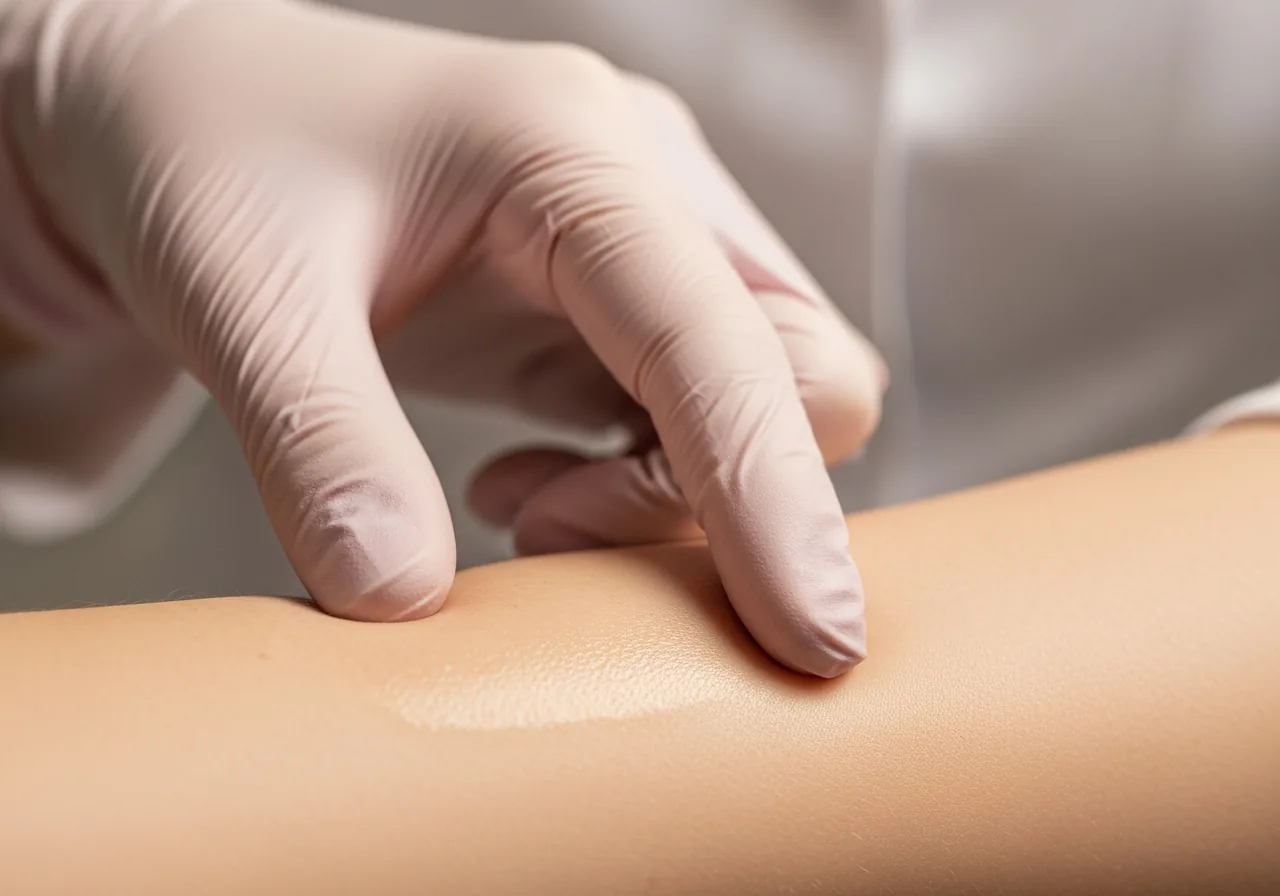
Vitiligo is a condition that causes areas of the skin to lose their natural colour, resulting in white patches. It can affect adults and children, and may appear anywhere on the body, although the face, hands and areas around the eyes and mouth are particularly common sites.
For some people, vitiligo affects only a small area and remains unchanged for many years. Others develop new patches over time.
Although vitiligo does not usually cause physical discomfort or affect general health, the change in skin appearance can understandably be upsetting, particularly when it affects visible areas such as the face.
The good news is that treatments have improved considerably in recent years. Alongside established treatments such as steroid creams, tacrolimus (Protopic) and specialist light therapy, newer treatments including ruxolitinib cream are now available for certain patients.
What causes vitiligo?
Vitiligo develops when the pigment producing cells in the skin, known as melanocytes, are lost or stop functioning.
These cells normally produce melanin, the pigment responsible for our natural skin colour.
Vitiligo is considered an autoimmune condition, meaning that the body's immune system mistakenly attacks its own pigment producing cells.
The precise reason why this happens is not fully understood. Genetics appear to play a role, and vitiligo sometimes runs in families.
However, many people with vitiligo have no family history of the condition.
Vitiligo is not an infection, is not contagious and is not caused by poor skincare.
What can trigger vitiligo?
Although vitiligo is an autoimmune condition, certain factors may contribute to the appearance of new patches in susceptible individuals.
Skin irritation, eczema and injury
One interesting feature of vitiligo is that new patches can sometimes develop in areas where the skin has been injured or inflamed.
This is known as the Koebner phenomenon.
For example, vitiligo may appear following repeated scratching, friction, cuts, burns or significant skin irritation.
Patients with eczema may notice pigmentation changes in areas that have been particularly inflamed or scratched.
However, not every pale patch following eczema is vitiligo. Eczema commonly leaves temporary areas of lighter skin, known as post inflammatory hypopigmentation, which is a different process and often improves naturally.
A dermatologist can usually distinguish between these conditions by examining the skin.
Sunburn
Sunburn can sometimes trigger new areas of vitiligo or cause existing patches to become more noticeable.
Because affected skin has lost its protective pigment, it is also more vulnerable to burning.
Stress and illness
Some people notice the onset or progression of vitiligo following a stressful period, illness or significant life event.
However, the relationship is not fully understood, and it is difficult to establish a direct cause in an individual patient.
Many people develop vitiligo without any identifiable trigger.
What does vitiligo look like?
Vitiligo usually appears as well defined patches of white skin.
The patches are often described as milky white and may become more noticeable after sun exposure, when the surrounding unaffected skin tans.
Common areas include:
Around the eyes and mouth
The hands, fingers and wrists
The elbows and knees
The armpits and groin
The trunk
Areas of repeated friction or injury
The skin generally feels completely normal, without scaling or thickening.
Occasionally, the hair growing within a patch also becomes white, including eyebrow or eyelash hairs.
Vitiligo can be more difficult to recognise in people with very fair skin, particularly during winter when the surrounding skin is less tanned.
What are the different types of vitiligo?
There are several recognised patterns of vitiligo, and identifying the type can help predict how the condition may behave.
Non segmental vitiligo
This is the most common form.
White patches often develop on both sides of the body in a roughly symmetrical pattern, for example around both eyes, on both hands or on both knees.
The condition may remain stable for long periods or gradually develop new patches.
Segmental vitiligo
Segmental vitiligo usually affects one side of the body or face.
It is more commonly seen in children and younger people.
The patches may develop relatively quickly before becoming stable, often within the first year or two.
Unlike non segmental vitiligo, it is less likely to continue spreading over many years, although treatment response can vary.
Acrofacial vitiligo
This describes vitiligo predominantly affecting the face and the extremities, particularly the fingers, hands, toes and feet.
Generalised vitiligo
Generalised vitiligo involves multiple areas of the body.
The extent can vary considerably, from scattered patches to more widespread pigment loss.
Universal vitiligo
This is a rare form in which most of the skin loses its natural pigment.
Importantly, developing a small patch of vitiligo does not mean that the condition will inevitably progress to widespread pigment loss.
Is vitiligo associated with other autoimmune conditions?
People with vitiligo have a higher likelihood of certain other autoimmune conditions compared with the general population.
The most important association is with autoimmune thyroid disease, including Hashimoto's thyroiditis and Graves' disease.
There are also associations with alopecia areata, type 1 diabetes and some less common autoimmune conditions.
However, most people with vitiligo are otherwise well.
Depending on symptoms, family history and clinical circumstances, thyroid function and thyroid antibody blood tests may be recommended.
Extensive screening for every autoimmune condition is not usually necessary.
How is vitiligo diagnosed?
Vitiligo is usually diagnosed by examining the skin.
A dermatologist will assess the appearance, distribution and pattern of the white patches.
Sometimes a Wood's lamp is used. This is a special ultraviolet light that makes areas of pigment loss appear particularly bright white, helping distinguish vitiligo from other causes of lighter skin.
A skin biopsy is rarely necessary.
Other conditions, including post inflammatory hypopigmentation following eczema, pityriasis alba and certain fungal infections, can resemble vitiligo.
An accurate diagnosis is particularly important before starting treatment.
Will vitiligo spread or can the pigment come back?
The course of vitiligo varies considerably.
Some patients develop only one or two patches that remain unchanged for many years.
Others experience periods when new patches appear, followed by long periods of stability.
Spontaneous repigmentation can occur, although it is often incomplete.
Treatment can help restore pigment in some areas, particularly when started relatively early.
The face and neck generally respond better than the hands, fingers and feet.
Longstanding patches and areas where the hairs have also turned white can be more resistant to treatment.
When pigment returns, it may initially appear as small brown dots around hair follicles. These gradually enlarge and merge as the surrounding skin regains colour.
Repigmentation is usually slow and may take several months.
Even following successful treatment, vitiligo can recur.
What treatments are available for vitiligo?
Treatment depends on the location and extent of the patches, whether the condition is spreading and how much it is affecting the individual.
Not everyone with vitiligo needs or wants treatment.
For someone with a small, stable patch that does not bother them, monitoring may be entirely reasonable.
For others, particularly when visible areas such as the face are affected, treatment may help restore pigmentation and reduce further progression.
Topical corticosteroids
Potent topical corticosteroids are commonly used as an initial treatment for vitiligo.
They work by reducing the immune activity responsible for pigment loss.
These may be prescribed as creams or ointments, depending on the location and the patient's age.
Treatment is usually given for a defined period, with regular review.
Long term continuous use of potent steroids can cause skin thinning, so treatment schedules may involve breaks or alternating with non steroid treatments.
Particular care is needed around the eyes and other areas where the skin is thin.
Tacrolimus (Protopic)
Tacrolimus, commonly known as Protopic, is a non steroid anti inflammatory ointment.
It is particularly useful for vitiligo affecting the face, eyelids and other sensitive areas where prolonged use of potent steroid creams is less suitable.
Unlike topical corticosteroids, tacrolimus does not cause thinning of the skin.
It works by reducing the immune response affecting the pigment producing cells.
Tacrolimus is commonly applied twice daily, although the treatment schedule may be adjusted according to the individual.
It can cause a temporary burning or stinging sensation when first applied, which usually improves with continued use.
Tacrolimus is used off label for vitiligo in the UK, but it is an established treatment supported by dermatology guidelines.
Newer treatment: ruxolitinib cream (Opzelura)
One of the most important recent advances in vitiligo treatment has been the introduction of ruxolitinib cream, marketed as Opzelura.
Ruxolitinib belongs to a group of medicines called JAK inhibitors.
It works by blocking some of the immune signals involved in the destruction of pigment producing cells, helping create the conditions for pigment to return.
Unlike traditional treatments, it has been specifically developed and studied for vitiligo.
Who can use ruxolitinib cream?
Ruxolitinib cream is licensed for non segmental vitiligo with facial involvement in adults and adolescents aged 12 years and over.
In February 2026, NICE recommended it as an NHS treatment option for eligible patients whose first line topical treatments have not worked or are unsuitable.
This represents an important development for patients who have previously had limited treatment options.
How effective is it?
Clinical trials have demonstrated meaningful repigmentation in a proportion of patients, particularly on the face.
However, results are not immediate.
Treatment is generally applied twice daily, and improvement develops gradually over several months.
Some patients require longer treatment to achieve their best response, and not everyone responds.
The treatment also has prescribing restrictions and potential side effects, so suitability should be assessed by a clinician experienced in treating vitiligo.
Light treatment for vitiligo
For patients with more extensive vitiligo or patches that have not responded adequately to creams, specialist light treatment may be considered.
The most commonly used treatment is narrowband ultraviolet B (NB UVB) phototherapy.
This involves exposing the skin to carefully controlled doses of ultraviolet light using specialist equipment.
The treatment helps reduce the abnormal immune activity in the skin and encourages pigment producing cells to become active again.
Phototherapy is usually provided through a hospital dermatology department or specialist centre.
Patients generally attend two or three times per week, often for several months.
It requires commitment, and results develop gradually.
Some patients achieve substantial repigmentation, particularly on the face and trunk, while areas such as the hands and feet tend to respond less well.
Phototherapy is not suitable for everyone, and the potential benefits and risks, including cumulative UV exposure, should be discussed with a dermatologist.
It is important not to confuse medically supervised phototherapy with sunbeds or deliberate sun exposure, which are not recommended as treatments for vitiligo.
What is the best sunscreen for vitiligo?
Sun protection is particularly important for people with vitiligo.
Melanin normally provides some natural protection against ultraviolet radiation. In areas affected by vitiligo, this protective pigment is absent, making the skin more susceptible to sunburn.
I generally recommend a broad spectrum SPF 50+ sunscreen with strong UVA protection, particularly on exposed areas such as the face, hands and neck.
Apply sunscreen generously before going outdoors and reapply approximately every two hours during prolonged exposure, particularly after swimming or sweating.
Protective clothing, shade and avoiding prolonged exposure during the hottest parts of the day are also helpful.
Does sunscreen stop vitiligo from improving?
A common misconception is that people with vitiligo need to expose their skin to sunlight to encourage pigment to return.
Although controlled ultraviolet light is used in specialist phototherapy, this is very different from unprotected sun exposure.
Deliberate sunbathing can cause burns and may potentially trigger further patches.
Tanning of the surrounding normal skin can also make white patches appear more noticeable.
Regular sunscreen use does not prevent prescribed topical treatments from working.
Do you need a tinted sunscreen?
Unlike melasma, where visible light protection from iron oxides can be particularly important, the main reason for sunscreen in vitiligo is protection against ultraviolet radiation and sunburn.
A tinted sunscreen may be helpful if you prefer some cosmetic coverage, but it is not essential.
The most important factor is choosing a broad spectrum SPF 50+ product that you are happy to use consistently.
Can camouflage products help?
Some people prefer to reduce the contrast between vitiligo patches and their surrounding skin.
Specialist skin camouflage products, tinted moisturisers and self tanning products can be useful.
Self tanning products containing dihydroxyacetone (DHA) temporarily colour the outer layer of the skin without requiring sun exposure.
They do not treat the underlying condition, but they can be a practical option for patients who prefer a more even skin tone.
Others prefer not to conceal their vitiligo at all.
Both approaches are entirely reasonable, and treatment decisions should reflect personal preference.
Can diet or vitamins help vitiligo?
There has been considerable interest in whether vitamin D, vitamin B12, antioxidants or other supplements can improve vitiligo.
Although correcting a genuine nutritional deficiency is important for general health, there is currently insufficient evidence that taking supplements in the absence of deficiency reliably restores pigment or prevents vitiligo from spreading.
Similarly, no particular diet has been shown to cure vitiligo.
Patients should be cautious about expensive supplements or alternative treatments promising complete repigmentation.
When should you see a dermatologist for vitiligo?
A dermatology consultation can be helpful if you notice new white patches, are unsure whether the diagnosis is vitiligo or have noticed that existing patches are spreading.
Assessment can also be useful if vitiligo affects the face or other visible areas and you would like to discuss treatment.
A dermatologist can confirm the diagnosis, assess whether the condition is active and recommend treatment according to the location and extent of pigment loss.
For limited vitiligo, topical corticosteroids or tacrolimus may be appropriate. Patients with more extensive or treatment resistant disease may benefit from newer treatments such as ruxolitinib cream or referral to a specialist phototherapy service.
Although vitiligo is a long term condition and its course can be unpredictable, many people have only limited areas of pigment loss, and treatments to encourage repigmentation have improved significantly in recent years.
For information about specialist assessment and care, explore General Dermatology.